


Mike Stewart: the Legacy of “Mr. Pipeline” Who Changed Bodyboarding Forever
- Ayelet Fuentes Guerra

- Apr 26
- 3 min read

Born in Hawaii in 1963, Stewart grew up in an environment where the ocean is part of everyday life, developing a natural connection with the sea from a very young age. Unlike many riders of his generation, however, he did not follow the traditional path.
At just five years old, at a time when bodyboarding did not yet exist as a formal discipline, Mike was already riding waves on pieces of foam. In this sport, he found a more direct way to interact with the ocean, especially in critical conditions: hollow, fast, and powerful waves that became his natural environment, shaping a style that would influence entire generations.

During the 1980s, as the sport began to expand globally, Stewart emerged as a revolutionary figure. He introduced new maneuvers, explored different lines within the wave, and raised the technical level to standards never seen before.
His approach combined precision, ocean reading, and creativity, turning every wave into an opportunity to push further. This mindset led him to dominate the competitive circuit for years, earning nine world titles and establishing himself as the most successful rider in the discipline.

Forged in extreme conditions
If there is one place that defines his career, it is Pipeline. There, he achieved multiple victories and developed a connection with the wave that allowed him to read deep barrels and make split-second decisions. That mastery earned him the nickname “Mr. Pipeline,” reserved for those who truly understand one of the most challenging breaks in the world, known for its power and technical demands.
His influence, however, is not limited to Hawaii. Stewart was one of the first to explore waves like Teahupoʻo in Tahiti, at a time when they were not yet part of the regular circuit. His interest in extreme conditions helped expand the limits of bodyboarding, proving the sport could take on waves of great size and complexity.
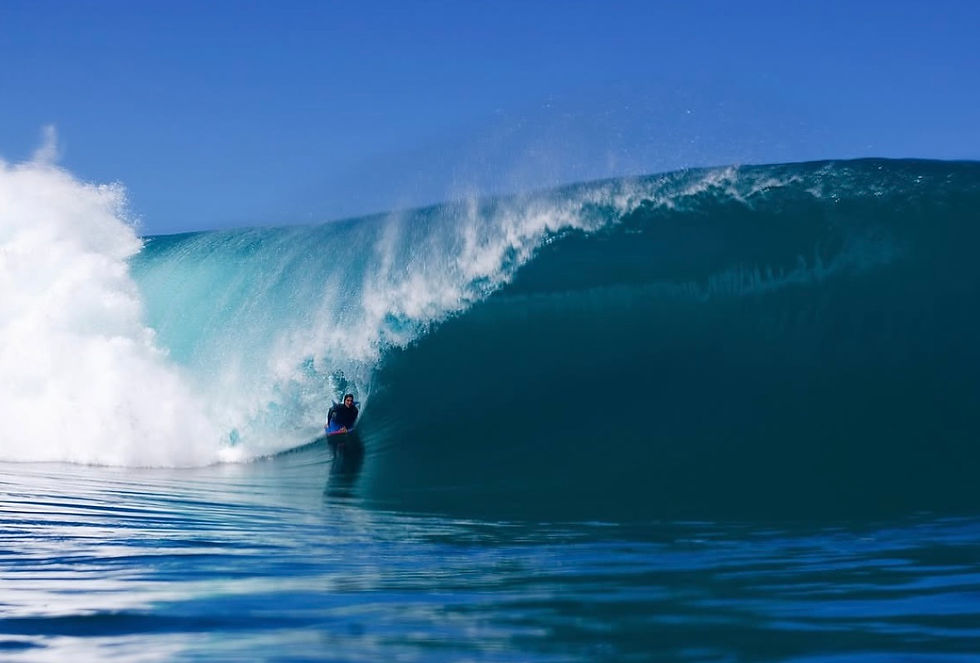
That relationship with the ocean continues today. Over the years, he has regularly traveled to Teahupoʻo to face one of the heaviest waves on the planet, maintaining his pursuit of perfection and connection with demanding environments. Recently, he demonstrated this in Chile by surfing “La Cosa” in Iquique, reinforcing his relevance and inspiring new generations to rethink what is possible on a bodyboard.

A legacy that transcends
Beyond titles, his career has also been defined by a constant relationship with the evolution of the sport. In 1998, he founded Science Bodyboards, a brand through which he translated his experience into board development, directly contributing to the technical innovation of bodyboarding.

Now in his sixties, Stewart remains active and connected to competition, participating in events such as the Shark Island Challenge and the Antofagasta Bodyboard Festival 2025. His presence is not driven solely by results, but by his philosophy: surfing is not just about competing—it is a way to stay balanced, connect with the ocean, and return to what truly matters.

This perspective has been key to sustaining his career over time and building a legacy that goes beyond sport. His name continues to shape generations, not only for what he achieved, but for what he left behind: a way of understanding, interpreting, and living bodyboarding.


Comments