


Rocky Point: a North Shore Classic


Just a few minutes from Pipeline lies Rocky Point, a surf spot that forms part of the famous stretch known as the “Seven Mile Miracle,” a concentration of world-class waves that attracts surfers from every continent each year.
Unlike some of Hawaii’s giant breaks, Rocky Point typically offers more accessible wave sizes while remaining just as technically demanding. The wave breaks over a shallow reef and features multiple peaks that work depending on the swell direction.

Many professional surfers take advantage of medium-sized North Shore days to train there, as it offers the perfect combination of power and maneuverability, making it one of the most complete waves in the Hawaiian archipelago.
Rocky Point has long been considered one of the most photogenic and competitive waves in the world. During the 1990s and early 2000s, the Jones family home, located directly in front of the wave, became a gathering place for photographers, surfers, and industry figures, where some of the most memorable sessions in modern surfing were documented.
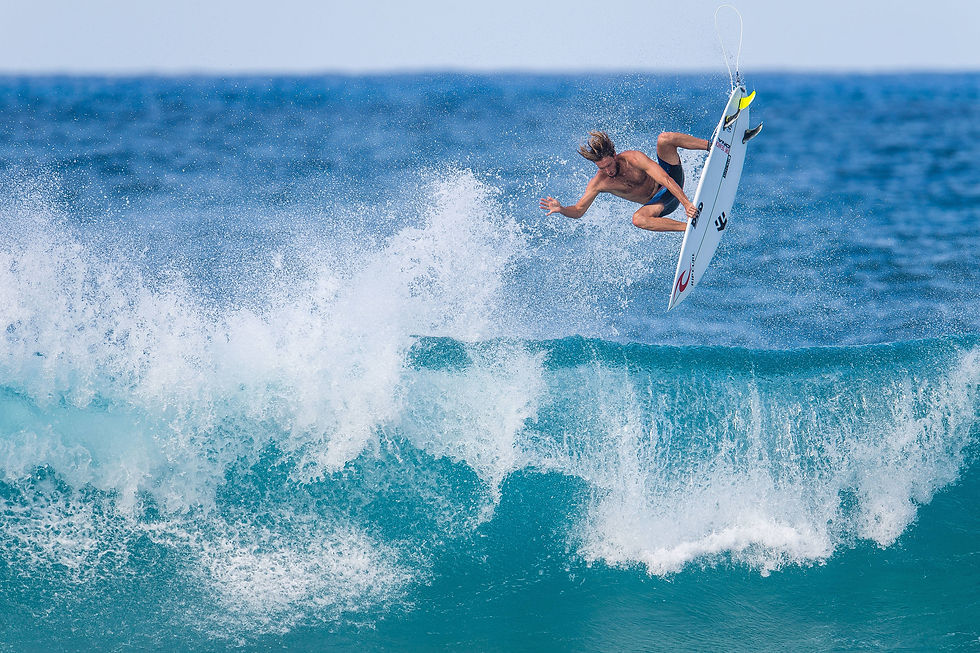
Its history is closely linked to the development of professional surfing and the rise of generations of Hawaiian surfers who would later achieve worldwide recognition, including Andy Irons, Bruce Irons, John John Florence, Nathan Florence, Mason Ho, and Coco Ho.

Its best conditions usually occur during the Hawaiian winter, between October and March, when North Pacific swells activate the area’s most consistent breaks. And while Rocky Point may appear friendly from the shore, the reality is quite different once you are in the water.
Many surfers who have visited the North Shore agree that it is a wave that demands respect, especially when the swell increases in size. The currents, the speed of the sections, and the proximity of the reef require experience and a solid understanding of the spot.

At Rocky Point, creativity, technique, and speed come together in every set that arrives from the Pacific. It is not uncommon to see international tour surfers sharing the lineup with local talents, keeping alive the competitive tradition that has made this wave a benchmark in the surfing world.

Comments